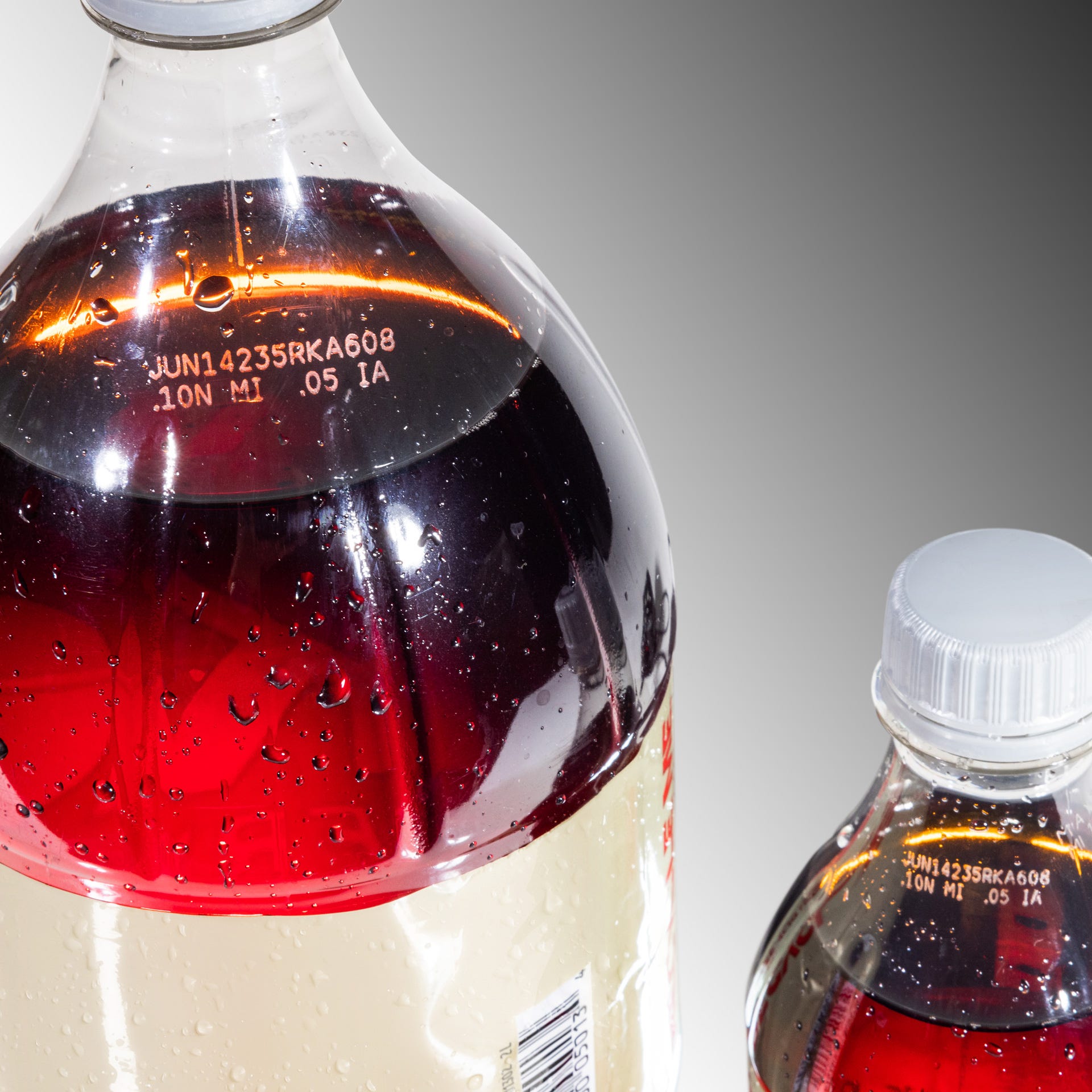
The Packaging and Packaging Waste Regulation 2025/40 (PPWR) introduces binding rules for recyclability, recycled content, and material reduction for manufacturers that place packaging or packaged products on the EU market. For PET bottles, this shifts sustainability from voluntary targets to mandatory compliance beginning August 2026. Beyond bottle design, PPWR also affects coding and marking on production lines, influencing code durability, product traceability, and recyclability across the product life cycle.
What does the EU PPWR change for PET bottles?
PPWR defines mandatory criteria for recyclability, minimum recycled content, and material minimization. For PET bottles, this means packaging must be designed to support recycling and circularity as a condition for market access.
“PPWR makes sustainability an entry condition for the European market rather than an option.”
Timeline
Key requirement
Essential criteria
12 August 2026
Start of PPWR application
Regulation becomes generally applicable, replacing the Packaging and Packaging Waste Directive and introducing binding packaging design, minimization, and recyclability‑by‑design obligations.
2030
Recyclable packaging
≥ 70% recyclability per packaging unit (all components included) must be achieved
2035
Recycling at scale
Effective recycling is required through existing recycling streams (~55% per packaging category)
2038
Stricter requirements
Higher recyclability thresholds must be met and phase‑out of low‑performing packaging
PPWR 2026: from sustainability ambition to legal requirement
The PPWR entered into force on 11 February 2025 and generally applies from 12 August 2026. Its objective is to reduce packaging waste and accelerate the transition to a circular economy. For PET bottles, it encourages lighter designs, higher recycled content, and improved recyclability by design.
Why is virgin PET under pressure?
PPWR promotes increased recycled content in plastic packaging and requires justification of material choices. This places pressure on the use of virgin Polyethylene Terephthalate (PET) and accelerates the shift toward higher rPET content and lower overall material use. Lightweighting combined with rPET could introduce greater variation in bottle thickness, clarity, and surface consistency.1
What lighter, high‑rPET bottles mean for production lines
Lightweighting is well established in PET bottles, but higher rPET content can introduce new material variability. Higher rPET content can result in greater variability in a bottle’s
color tone
transparency
surface consistency
Lightweighted bottles may be more sensitive to heat and mechanical stress during conveying, filling, and marking. From a coding perspective, this reinforces the need for solutions that maintain readability while preserving bottle integrity and line efficiency. As highlighted in the Videojet whitepaper Evaluating the implications of PET lightweighting on the marking of date codes, this evolution does not represent an entirely new challenge but rather an extension of lessons learned from earlier lightweighting initiatives, applied to more material-diverse bottles. 23
Why bottle marking matters for PPWR compliance
The marking of codes and other product information on bottles supports traceability, product identification, and alignment with recycling and reuse systems. As outlined by the Bottle Bill Resource Guide, countries across Europe, North America, and parts of Asia and Latin America now operate or are introducing systems commonly known as Deposit Return Schemes/Systems (DRS). These bottle-return systems rely on accurate container identification to support the deposits, returns, and refunds 4. Depending on whether a bottle is single-use or reusable, the marking needs will differ. For reusable bottles in these systems, bottle tracking coding must remain legible and reliable throughout repeated handling, washing, and sorting, while lot code and unique information should be removed with existing washing and cleaning processes. As regulatory and operational requirements increase, manufacturers must balance a code’s readability, durability, and permanence while aligning with recyclability and reuse goals.
How coding technologies adapt to evolving PET materials
Switching to new or different PET materials requires careful selection of marking technologies. Continuous inkjet printers (CIJ) provide flexibility across a wide range of PET applications. Laser marking is increasingly considered for lightweight PET because it creates controlled surface effects without adding inks or labels to the recycling stream.
Comparison of continuous inkjet (CIJ) vs. CO2 laser for marking PET bottles
Criteria
CIJ
CO2 laser
Suitability for PET
Well suited for high‑speed PET and thin‑walled PET bottles, largely unaffected by lightweighting
Well suited when correctly configured for PET thickness and desired mark effect
Key PET consideration
Ink adhesion and contrast on PET and rPET substrates
Wavelength selection is critical to avoid burn‑through on thin‑walled PET
Marking effect
Printed alphanumeric expiry date and lot codes
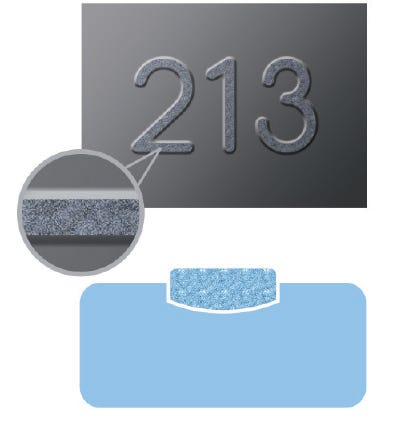
Foaming for thin‑walled PET (preferred) or engraving for thicker PET
PET‑specific setup
PET‑compatible inks for consistent readability at high speeds; wash-off inks for reliable reuse applications
9.3 µm wavelength for foaming effect, resulting in over 50% shallower marks than conventional 10.6 µm
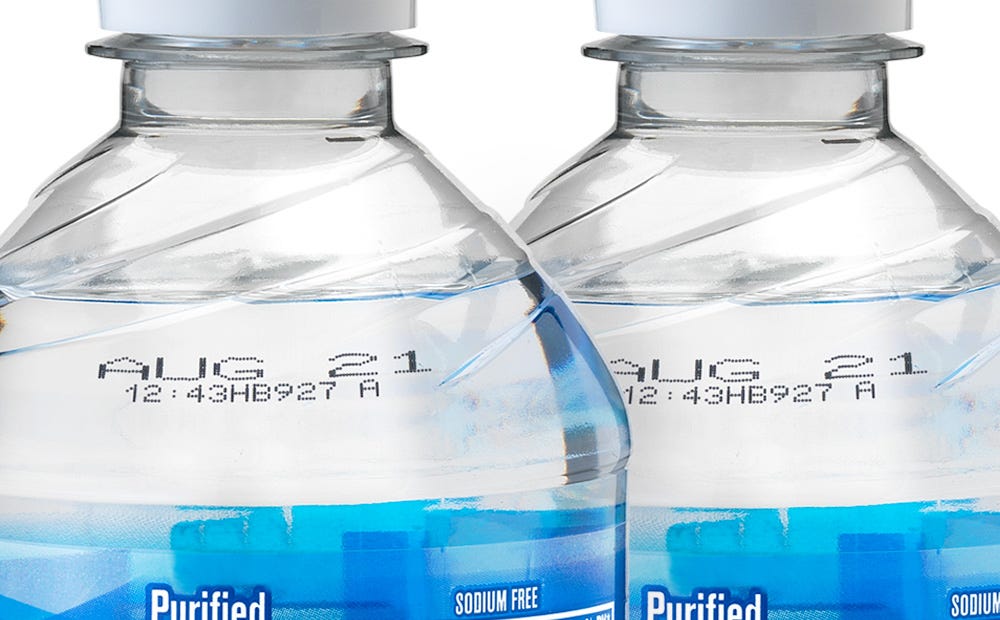
Continuous inkjet and CO2 laser marking are both widely used on high‑speed PET bottle lines. CIJ offers flexible, high‑speed coding with suitable inks, while CO2 laser systems are set to PET‑specific configurations, such as wavelength selection, to achieve a foaming effect that preserves bottle integrity on thin‑walled PET. 5
What is a label‑less bottle?
With a label‑less bottle, product and regulatory information is printed or marked directly on the bottle surface rather than applying a separate label. The information is added with an ink-based printer or a laser set up on the bottling line. This approach helps reduce material complexity and supports cleaner recycling streams. Additionally, direct-to-bottle printing and marking can act as a cost savings initiative for beverage companies, reducing expenses for labels.
Why label‑less bottles are gaining relevance
Label‑less PET bottles help simplify packaging and improve recyclability by eliminating labels that make PET bottle recycling more challenging. Regulatory examples, such as label‑free PET water bottles in South Korea6, show how policy can accelerate designs that rely on on‑pack marking instead of labels. Marking must balance visibility, durability, recyclability, and cost efficiency.
rPET and reusable PET bottles
PPWR also supports higher reuse rates for packaging. In reusable PET systems, certain codes must withstand repeated handling, cleaning, and circulation while remaining readable and reliable. Depending on the reuse model, both permanent and refreshable marking approaches may be used. Increasingly, two‑dimensional codes are being adopted to support reuse management, product identification, and return logistics.
Outside of the EU, a real‑world example of bottle reuse can be seen in Chile, where Coca‑Cola introduced reusable one‑liter PET bottles incorporating a 2D traceability code powered by GS1 that enables tracking and quality control across multiple reuse cycles.7 Their process takes advantage of a permanent marking technology, CO2 lasers, to support reusable PET designs by delivering durable, machine‑readable codes aligned with traceability and circular packaging goals.
Bottle marking as a design‑for‑recycling decision
Under PPWR, packaging decisions are increasingly evaluated through the lens of recyclability and circularity. Coding and marking choices are no longer only operational considerations, as they can influence how easily a bottle can be recycled, reused, or returned.
As PET bottles evolve through lightweighting, higher rPET content, and reuse models, marking should be considered early in the packaging design process. Aligning the marking technology with the bottle material and regulatory expectations helps ensure compliance, maintain code quality, and preserve flexibility as requirements continue to develop.
Conclusion
PPWR signals a long-term shift rather than a single deadline. For PET bottle manufacturers, understanding how the regulation, material evolution, and marking technologies intersect is key to preparing production lines for future requirements.
Find the best coding solution for your PET bottle line
This article is based on a review of EU PPWR regulatory requirements, industry sources, and Videojet technical documentation related to PET bottle design, recyclability, and marking technologies. Insights are further informed by Videojet subject matter experts in sustainability, packaging, and coding and marking, ensuring alignment with real-world production environments. Together, these inputs provide a practical perspective on how regulatory requirements and material changes impact marking choices on PET production lines.
Frequently asked questions
When does PPWR apply to PET bottles?
PPWR is generally applicable from August 2026, although individual requirements may apply at different times.
Does PPWR require rPET in PET bottles?
The regulation promotes higher recycled content and requires justification of material choices, increasing pressure on virgin PET, see table under “Sources” 8
Why does bottle marking matter for PPWR compliance?
Marking can support traceability, identification, and alignment with recycling and reuse systems.
Laser or inkjet: Which is better for printing codes on PET bottles?
Neither laser nor continuous inkjet (CIJ) is universally “better” for PET bottles. The best choice depends on bottle design, line conditions, and marking objectives.
CIJ is widely used on high‑speed PET beverage lines and offers flexibility across different bottle shapes, colors, and operating environments. Laser marking can be a strong option where permanent, direct‑to‑bottle marking is desired, particularly for label‑less bottles, provided the system is configured specifically for PET thickness and surface characteristics.
How can we ensure high-quality coding on wet or cold bottles?
Wet and cold PET bottles are common in beverage production, especially downstream of rinsing, filling, and cooling. To ensure high‑quality coding, the marking solution must tolerate condensation, low surface temperatures, and high throughput.
CIJ systems are often selected in these environments because appropriate ink formulations can adhere reliably to PET even when bottles are cold or slightly wet. Air knives can play a crucial role in these applications by effectively drying and blowing off moisture from bottles before printing, ensuring optimal ink adhesion and code clarity. Lasers are also used on cold and wet products, offering a durable, non-contact coding solution that performs well under these challenging conditions.
In all cases, stable print positioning, environmental protection around the coder, and proper setup are critical to maintaining code quality under challenging line conditions.
What coding technology provides the best adhesion on PET?
Adhesion on PET is influenced less by the technology itself and more by how the technology is tailored to the substrate.
For CIJ, adhesion depends on selecting inks designed specifically for PET and rPET surfaces, taking into account factors such as surface energy, bottle temperature, and exposure to moisture. Laser marking does not rely on adhesion at all, as the mark is created by interacting directly with the PET surface, making it inherently resistant to smudging or removal when properly configured.
How can we ensure high contrast codes for better scannability?
High contrast codes on PET bottles require aligning the marking method with the bottle’s color, transparency, and finish.
With CIJ, contrast is driven by ink selection, character size, and print quality, particularly on clear or lightly tinted PET. For laser marking, contrast depends on achieving the right surface effect. On thin‑walled PET, a laser’s foaming or frosted effect can improve visibility without weakening the bottle. Regardless of technology, proper code placement and validation using scanners or vision systems are essential to ensure reliable scannability throughout the product life cycle.